


What the fee covers
Accounts, annual budget, meetings and minutes, collecting service charges, late payers, insurance and maintenance. And what is charged separately, such as an extraordinary meeting or an insurance claim.
Management quotes for the owners’ associations looking for a manager, and one clear place where residents report a repair. Two audiences on a single website, and every report on your phone with the building and what has happened.
Free until your first customer or 6 months · No card · No commitment · Live in minutes
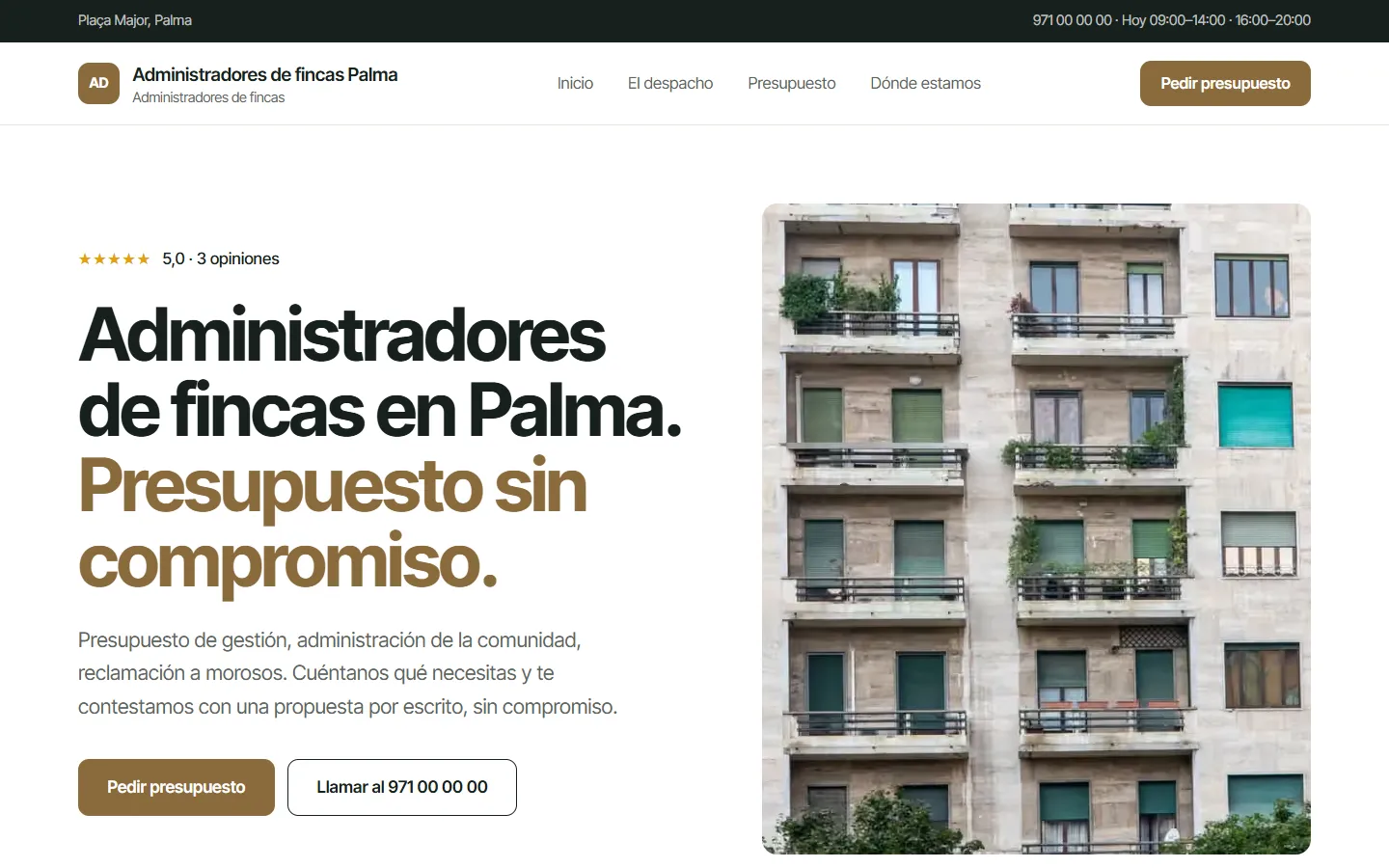
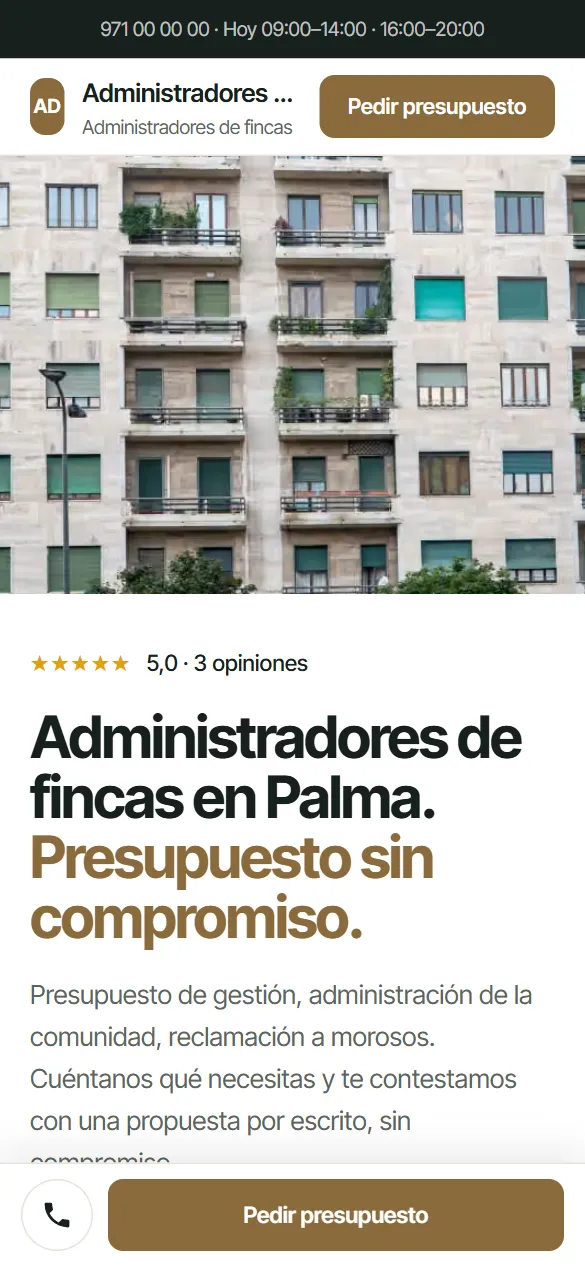
You pick property managers from the list, your website’s name and your phone number, and the website is created with what a business like yours offers (management quote, owners’ association management and recovering arrears from late payers), which you replace with your own from the dashboard.
Thirty-six designs and your colour, with your property management website alongside while you choose. When you finish, it is already live.
There are no reviews from property managers on Agendra yet: have a look at other customers’ websites.
An owners’ meeting chooses a manager on trust and on being close by, and the residents of the buildings you already run only want to know who to tell. The website has to serve both without mixing them up.
Accounts, annual budget, meetings and minutes, collecting service charges, late payers, insurance and maintenance. And what is charged separately, such as an extraordinary meeting or an insurance claim.
A guide price per home, by bands or per building, or “Ask” if you prefer to give the figure after seeing the property.
And the professional liability insurance that covers your management. It’s what anyone who has had a bad manager asks.
A form with the building, the entrance, what is wrong and whether it’s urgent, and the phone number for what can’t wait.
What has to be approved at the owners’ meeting, which documents are handed over and how long it takes. The question every association thinking of leaving has.
Neighbourhoods, towns and types of property: estates, buildings with shops, car parks. Each area with its own page if you have something to say about it.
Certificates of outstanding debt, copies of minutes, changes of owner. What is needed and how to request it.
Nobody types “website” when they need property managers: they search for what they need, with their own words. These are the ones that bring work to a website like yours.
Whoever needs owners’ association management or recovering arrears from late payers calls you, messages you on WhatsApp or asks through a form that asks what is needed and where.
An owners’ association changes manager when it is fed up with the one it has. Before asking for quotes, the chair searches on Google, and what they look at is whether you reply, whether you are nearby and what the fee includes.
Accounts and annual budget, meetings and minutes, collecting service charges and chasing late payers, insurance and maintenance. In writing, so it can be compared with what the current manager does.
Per home per month, by bands or with a minimum per building. Even if the exact figure comes after seeing the property, saying how you charge removes the first doubt.
Your professional registration number and your liability insurance, in plain view. It’s what an owners’ meeting asks when it has already had a scare with the association’s money.
An association wants a manager who can drop by the building. Each area where you work can have its own page, with what you know about it.
Today a leak in the car park arrives by WhatsApp, by email, by a call to your mobile and through the chair, all at once and with half the details. With a repair form on the website, it arrives once and with what you need to send the tradesperson.
Building, entrance and flat, what has happened, since when and whether it’s urgent. You choose the questions, and the report reaches your email and your phone.
What to do if the entrance floods on a Sunday: the insurer’s assistance number or your own on-call number, written where the resident will find it at eleven at night.
Reports stay in the dashboard with their date and details, even if the email fails. When someone at the meeting asks who reported the leak and when, it’s in writing.
A button with your number and the message already started. You switch it on if you want to receive reports that way and switch it off when it gets too much.
A website is not property management software, and it’s worth being clear about that before you start so that nobody gets a surprise.
Each association’s accounts, the bills and the direct debit batches to the bank stay in your management software. The website doesn’t touch them.
They are prepared and sent as always. What the website can have is a page explaining how a meeting is called and what the Horizontal Property Act (Ley de Propiedad Horizontal, Spain’s law on owners’ associations) requires.
If your associations need to check accounts, minutes and bills with a username and password, that is an owners’ portal, which the sector’s software usually includes. This website is the public face: winning associations and receiving reports.
The certificate of outstanding debt for selling a flat, a copy of the minutes, a change of owner: the website explains what is needed and the form collects the request with the details.
Anyone looking for software for their office is usually looking for two things at once: running the associations and being found. The first is done by your management software; this website does the second, which is the one that brings in new associations.
Address of the property, homes and commercial units, car park, pool or lift, and since when they have been looking for a manager. It reaches your email and your phone, and you call knowing which building it is.
Every repair comes in through the form with the building and what has happened, pops up as a notification on your phone and stays in the dashboard with its date.
The places where you manage associations, each with its own page and with what you know about it. People look for a manager close by.
A property management office loses time on two fronts: quotes for associations that were only comparing, and residents’ reports that arrive with no details. The website can filter the first and put the second in order.
Anyone searching “how to change property manager” has half made the decision. What your management includes, your area and how to reach you, in writing, and the quote request one tap away.
Address of the property, number of homes and commercial units, whether there is a car park, pool or lift, and since when they have been looking. Before calling you know whether the association is for you and how much work it will give you.
Every repair comes in through the form with the building, the entrance and what has happened, and alerts you on your phone even if you’re in a meeting. They all stay in the dashboard, with their date.
These are not drawings: it is the sample website for property managers, live right now, and you can switch design with one click without losing anything you have written.
Some look for it as management software for property managers, others as a services website and others as online quotes: here it is the same thing.
It works just the same if your business is called property manager, property management, block manager or owners’ association management: it is the same software and the same website.
Your website live at administradores-de-fincas.agendra.digital, with your services, your opening hours and your contact form, with no card, for 6 months or until your first customer.
Your property management website with your own domain, on Google, with Agendra AI and marketing every week. Everything included and no commitment.
If you are torn between this, a custom-built property management website or sticking to social media: what each option costs and what it gives you.
Yes, because a recommendation ends in a search: the chair who has heard your name types it into Google before calling you. If they find what your management includes, which areas you cover and your registration number, they call with the decision half made. With your own domain, on the Professional plan, the website can also show up when someone searches for a manager in their town, although nobody can guarantee you a position.
No. The associations’ accounts, the bills, the direct debit batches, the meeting notices and the minutes stay in your software. The website is the public face of the office: what someone looking for a manager sees and the place where residents write to you. If you need each owner to check their bills with a password, that comes with the sector’s software, not this website.
As the way in, yes: residents fill in the form and the report reaches your email and your phone with the details you ask for. It doesn’t track the job with the tradesperson or update the resident at each step: that stays in your software or on your phone.
Each service can be marked “Ask”, and that’s how it shows on the website, not as free. What is worth explaining is how you work out the fee — per home, by bands or with a minimum per building — even if you give the amount after seeing the property.
Yes, in the office’s introduction text, which appears on the home page and in “About us”. It’s one of the first things an owners’ meeting that has had problems with its previous manager looks at, and having it on the website saves you explaining it at every first meeting.
The website doesn’t handle emergencies, but it can make clear who to call. Put the associations’ insurance assistance number or your on-call number on a page, and say on the form that reports are read during office hours. A resident with water in the entrance on a Sunday needs a number, not a form.
Yes, one for each place where you manage associations, each with its own address and its own text: whether they are estates with a pool, old buildings with the technical inspection pending or properties with shops. Repeating the same page and changing the name of the town adds nothing for the reader, and Google doesn’t want it either.
What people ask you at meetings: how to chase a resident who doesn’t pay, what majority is needed to install a lift, who pays to repair a downpipe, what the reserve fund is for. An article that answers a real question is found by the resident who has it, and that resident is often the next chair.
Management quotes for the owners’ associations looking for a manager, and one clear place where residents report a repair. Two audiences on a single website, and every report on your phone with the building and what has happened.
Free until your first customer or 6 months · No card · No commitment · Live in minutes