 6 October 2026
How to choose a business name you won’t regret
How to choose a business or company name: practical criteria, name ideas and what to check first (domain, social media, company and trademark registers).
A business name has to work, not just sound good
A small business’s name gets said over the phone, typed into Google, painted on a sign and scribbled on a piece of paper in a hurry. A good business name is one that survives all that without anyone getting it wrong. Sounding good as well is a bonus.
Changing it later is costly: the sign, the business cards, the van, the domain, the Google Business Profile and the reviews you’d already collected under the old name. That’s why it deserves an afternoon of checks before you decide, not just a brainstorm. The lists of business names going around online are useful for getting unstuck; what decides is what comes next.

How to choose a company name: practical criteria
These criteria rule out most of the names that end up causing trouble:
- It can be dictated over the phone without spelling it out: if you have to add “with a V” or “all one word” when you say it, keep looking.
- It says what you do or where: “Fontanería Ribera” (Ribera Plumbing) explains itself; “Nexo Soluciones” doesn’t.
- Short: two or three words at most, so it fits on the sign and on a phone screen.
- No puns that only work in writing, and no English words your customers can’t pronounce.
- It doesn’t box you in: “Baños Pérez” (Pérez Bathrooms) falls short the day you start doing kitchens, and “Pintores Getafe” (Getafe Painters), the day you work in Madrid.
- It isn’t similar to another business in your industry in your area, or to a well-known brand.
 Keep readingHow to register a domain name, and how much it costs
Business name ideas: where they come from
If nothing comes to mind, there are formulas that work in almost every trade. They aren’t clever, and that’s exactly why they’re remembered. Name generators and artificial intelligence tools also give you ideas, but they don’t check anything: use them to get unstuck and run every suggestion through the checks in the next section.
- Your first name or surname with your trade: “Peluquería Marta Ruiz”, “Electricidad Domínguez”. It builds trust and is unlikely to be taken.
- Your trade with the neighbourhood, street or district: “Clínica Dental Ensanche”, “Taller La Vega”.
- A word from your trade with another that represents you, as long as it’s understood first time.
- Something from your story: your grandparents’ village, the nickname people already know you by.
- An invented word, short and easy to pronounce, if you’re sure you’ll spend time making it known.
Before you decide: domain, social media and Google
The domain matters more than it seems: if the name isn’t available with any reasonable ending, your website will have an address different from your name, and you pay for that every time someone tries to type it. With two or three candidates, do these checks before falling in love with any of them:
- Search Google for the name, on its own and with your trade and your town. If a similar business nearby comes up, rule it out.
- Search for it on Google Maps, to see whether anyone in your area has the same name.
- Check whether the domain is available, in .es and .com, spelt the way it’s said.
- Check the username is free on the social networks you’ll use.
- Say it over the phone to three people and ask them to write it down. If they write it differently, you have your answer.
- Write it small, as it would look on a phone screen, and large, as on a sign.
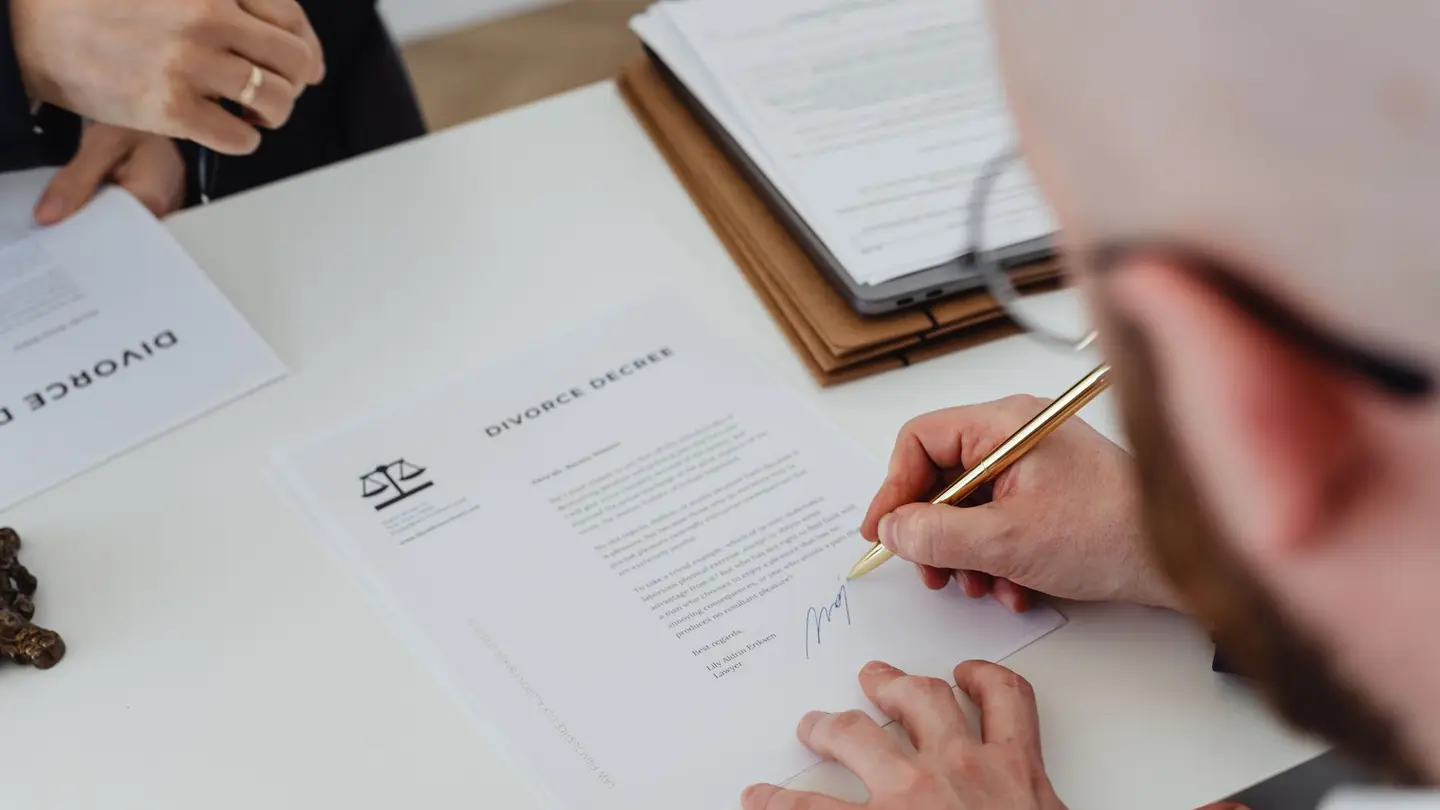
If you’re setting up a company: the name certificate from the Registro Mercantil
If you’re setting up a company, such as a limited company (sociedad limitada, S.L.), its registered name can’t be the same as one that already exists. To check, you ask the Central Registro Mercantil (Spain’s companies register) for a certificación negativa de denominación: a document stating that no other company already has that name and reserving it for you for a while. It’s one of the first steps in forming the company, and it’s usually handled by the gestoría (accountancy and paperwork firm) or the notary helping you; you can request several names in order of preference, in case the first is taken.
Two points to note. First: the registered company name and the trading name —the one on the sign— can be different; the company can be called “Pérez Ribera Instalaciones, S.L.” and the business “Fontanería Ribera”. Second: if you work as an autónomo (self-employed), there’s no company name to register, because you invoice under your own name, and your business name is a trading name.
 Keep readingHow to improve your business’s online presence
Protecting the name as a trademark: the OEPM
A clean name certificate doesn’t mean you can use the name as a brand without problems: the Registro Mercantil only looks at the names of other companies. Trademarks and trading names are registered with the Oficina Española de Patentes y Marcas, the OEPM (Spanish Patent and Trademark Office), and they protect the name for specific products or services.
Before ordering the sign, search for your candidates in the OEPM’s trademark search tool, which is public and free. If another business has already registered an identical or very similar trademark for the same thing you do, it could ask you to stop using it, even if you use it in good faith. Registering your own has a cost and a procedure: for a neighbourhood business it isn’t always worth it; for a brand you plan to grow or sell online, it usually is. If in doubt, an industrial property agent or your gestoría can advise you; this is a guide, not legal advice.
Once you have it
Use the name exactly the same way everywhere: the sign, the Google Business Profile, the website, social media and invoices. Google cross-checks that information, and when it doesn’t match it isn’t sure which is right; we explain it in what a Google Business Profile is. And don’t add words to the name on your profile to rank higher, like “Fontanería Ribera, cheap emergency plumber”: it’s grounds for suspension.
Register the domain the same day you decide, even if the website takes a while: it costs little and stops someone else taking it. On Agendra, the website is created with your business name in a minute and published for free at yourbusiness.agendra.digital; with the Professional plan you connect your own domain, or Agendra buys it for you and connects it for €15 plus VAT, as a one-off payment. More in custom domain. How to register it and what it costs each year, in how to register a domain name.
Frequently asked questions
How do I choose a name for my business?
It should be clear when dictated over the phone, say what you do or where, be short and not box you in if you grow. Before deciding, check on Google that there isn’t another one like it nearby and that the domain and social media handles are free.
How do I know if my company name is already registered?
For a company, by requesting a name certificate (certificación negativa de denominación) from the Central Registro Mercantil, Spain’s companies register. As a trademark or trading name, by searching the OEPM’s trademark search tool. They’re two different registers and it’s worth checking both.
Do I have to register my business name if I’m self-employed?
As an autónomo (self-employed) you invoice under your own name, so there’s no company name to register. If you want to protect the trading name or brand, that’s done with the OEPM; it’s usually worth it if you plan to grow or sell online.
Free business name generator →
Related pages
More articles

How much does a website cost for a freelancer in Spain?
Agency, freelance designer, template or do it yourself: what each route costs, upkeep and the domain, and when each one pays off.
Read the article →
How to create an online booking calendar for your business, step by step
Services with their duration, your hours, buffers between appointments, alerts and where to put the link so people book without calling you.
Read the article →
Why your small business needs a website (and when it doesn’t)
What a website does that a Google Business Profile and Instagram don’t, when you need one, when you can wait, and what it has to include to be any use.
Read the article →Your website, live in minutes
Free until your first customer or 6 months · No card · No commitment · Live in minutes